Why Indy Businesses Are Wrapping Their Vehicles — And Winning More Customers
Why Indianapolis Businesses Are Wrapping Their Vehicles to Boost Brand Visibility and Win More Customers
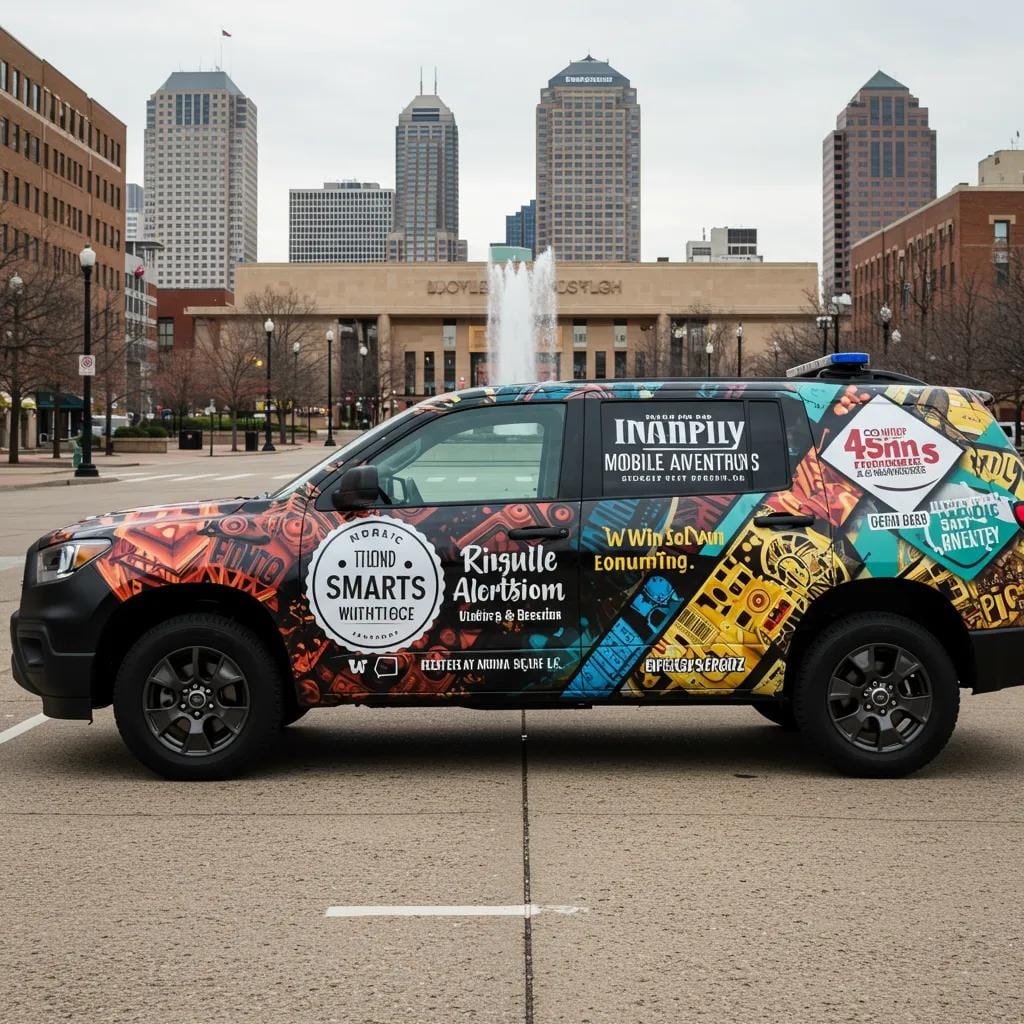
Vehicle wraps are large-format vinyl graphics applied to company cars, vans, and trucks that turn everyday vehicles into mobile billboards, increasing local visibility and driving customer acquisition. This article explains why vehicle wraps are becoming a preferred local advertising tactic in Indianapolis, how they function as mobile advertising, and which wrap types and design choices deliver the best results for business fleets. Many Indianapolis business owners face rising customer-acquisition costs and limited local reach; vehicle wraps provide a durable, one-time-visible asset that repeatedly exposes brand messaging across neighborhoods, job sites, and commuting routes. Readers will learn the primary benefits and measurable impact of wraps, compare full, partial, and decal-based solutions, review practical design principles and 2025 trends, and understand the professional installation workflow and ROI-tracking methods. The content integrates local context and actionable tracking strategies—like unique phone numbers, QR codes, and landing pages—so business owners can estimate impressions and calculate cost-per-impression versus traditional channels. Throughout, we reference local commercial vehicle wrap services generically (commercial vehicle wraps, fleet graphics, custom vehicle decals) and provide prompts for booking consultations or requesting tailored quotes.
What Are the Key Benefits of Vehicle Wraps for Indianapolis Businesses?
Vehicle wraps convert company vehicles into mobile billboards that attract repeated local impressions, protect paint, and create a professional brand presence—delivering measurable marketing value over time. Wraps work by combining high-contrast graphic design and durable vinyl film that remains visible across daily routes, increasing brand recognition through repetition and geographic targeting. The main benefits for Indianapolis businesses are sustained visibility across neighborhoods, a lower cost-per-impression than many recurring ad buys, and vehicle preservation that helps resale value. Below is a compact comparison to quantify these impacts for planning and budget discussions.
This table compares typical visibility and cost metrics businesses can expect when investing in a fleet wrap.
These figures illustrate how mobile advertising through wraps often delivers high impression counts and comparatively low CPMs, making wraps an efficient local advertising channel for Indianapolis businesses. For businesses ready to act, local commercial vehicle wraps, fleet graphics, and custom vehicle decals are available to translate these benefits into bookings and visibility.
How Do Vehicle Wraps Increase Local Brand Visibility in Indianapolis?
Vehicle wraps increase local brand visibility by exposing branded messaging to diverse local audiences during daily routes, service calls, and parked locations, creating repeated impressions that build recognition. As vehicles traverse Indianapolis neighborhoods, they function like moving outdoor signage, targeting people who live, work, and commute nearby—especially effective for service businesses with regular local routes. For example, a van servicing several neighborhoods each day can generate tens of thousands of impressions monthly, supporting top-of-mind awareness for nearby residents and businesses. This repeated exposure strengthens recall and makes other marketing touchpoints, like digital ads or local listings, more effective due to cross-channel reinforcement.
This form of advertising, much like traditional billboards, relies on consistent exposure to capture audience attention.
Effectiveness of Billboard Advertising FormatsIn this study, we’ll go into more detail on the effectiveness of billboard advertising and how it formats, including posters, bulletins, mobile billboards, and others that imaginatively make
The efficacy of the multimodality of billboard advertising and customer attention, 2023
Why Are Vehicle Wraps a Cost-Effective Advertising Solution for Indy Businesses?
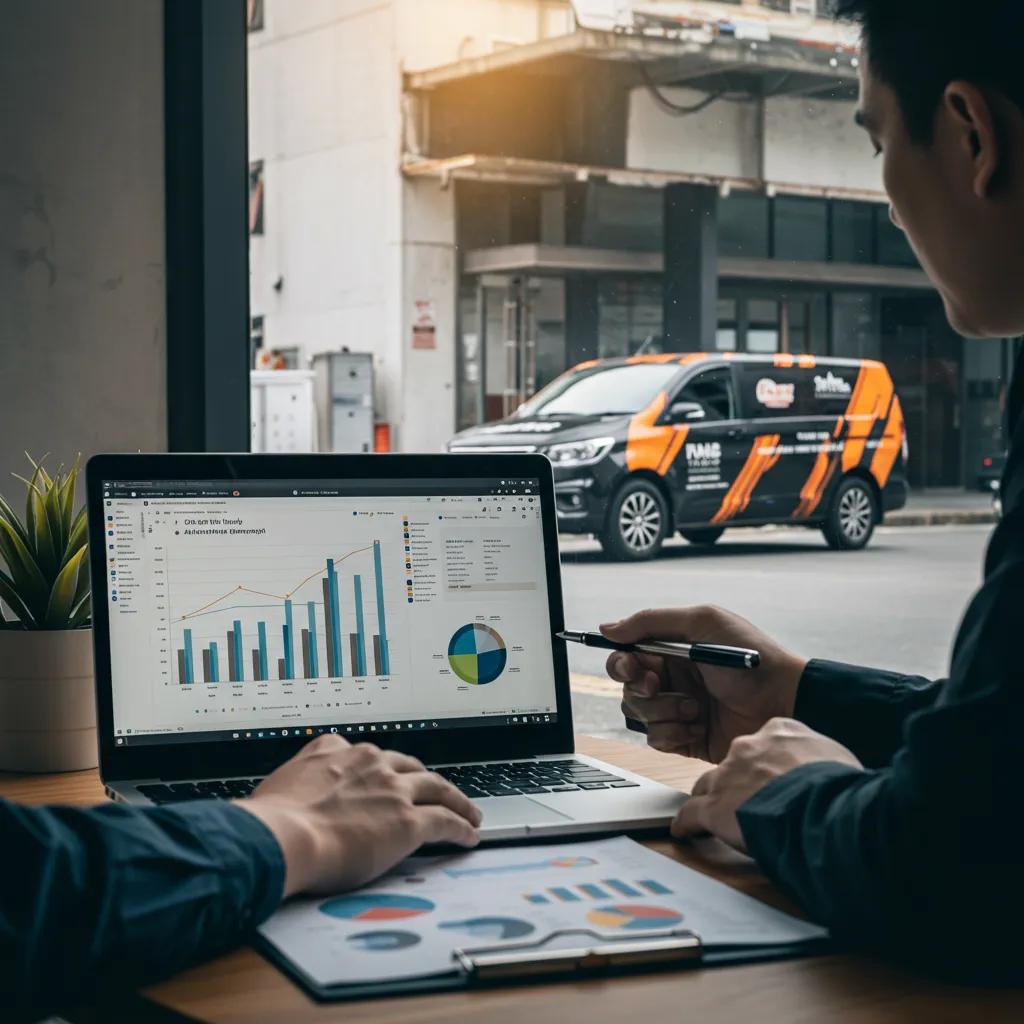
Vehicle wraps are a cost-effective solution because the primary expense is an upfront installation rather than recurring media buys, spreading exposure across months or years with minimal ongoing costs. Calculating CPM (cost per thousand impressions) often shows wraps outperforming short-term billboard campaigns and print ads when a vehicle is used consistently for local routes. For instance, spreading the one-time cost across a 3–5 year campaign period yields a low monthly equivalent marketing expense, and businesses gain ongoing exposure without repeated ad spend. This makes wraps a particularly smart investment for local service providers and delivery fleets aiming to maximize long-term reach on a fixed budget.
How Do Vehicle Wraps Protect Business Vehicles and Enhance Professional Image?
Wraps protect vehicle paint by providing a sacrificial vinyl layer and laminate that reduces scratches, chips, and UV fading, which helps maintain resale value and reduces long-term maintenance costs. Beyond protection, consistent branded graphics create a professional image that increases customer trust during service visits or curbside interactions; customers are likelier to respond to a clearly branded vehicle than an unmarked one. The visual consistency of fleet graphics reinforces credibility across multiple touchpoints, and the physical protection provided by premium vinyl and laminate translates into lower repainting or bodywork needs over time.
What Types of Vehicle Wraps Are Best Suited for Indianapolis Business Fleets?
Different wrap options serve distinct goals: full wraps maximize visibility, partial wraps and decals provide targeted messaging at lower cost, and fleet graphics ensure consistent branding across multiple vehicles. Choosing the right type depends on budget, marketing goals, vehicle type (van, truck, car), and the desired longevity of the campaign. Below is a compact comparison to help businesses decide which approach suits their fleet and objectives.
This table summarizes common wrap types and practical trade-offs for decision-making.
This comparison clarifies how full wraps deliver maximum exposure while partial wraps and custom decals offer budget-friendly, campaign-specific alternatives; businesses can request tailored quotes from local providers for exact pricing and vehicle-specific recommendations.
What Are Full Vehicle Wraps and When Should Businesses Choose Them?
Full vehicle wraps cover most or all exterior surfaces with continuous graphics and are ideal when maximum brand impact is the priority, such as for delivery fleets, mobile services, or promotional vehicles. Full wraps use premium vinyl films and laminates that can last multiple years with proper care, producing the highest visual prominence and best long-term CPM. Businesses launching a new brand or running citywide campaigns typically choose full wraps to build broad recognition quickly. For vehicle-specific pricing and design planning, Indianapolis businesses can request tailored quotes to assess ROI compared with partial or decal-only approaches.
How Do Partial Wraps and Custom Decals Support Targeted Advertising?
Partial wraps and custom decals place graphics on specific panels—like doors, rear quarter, or tailgates—making them cost-effective for focused messages or short-term promotions. These options enable fast turnaround and easier updates for seasonal offers or campaign changes while keeping installation and removal times lower than full wraps. Partial wraps work well for vehicles where full coverage would be unnecessary or for businesses testing messaging before committing to fleet-wide full wraps. Local fleet graphic services can provide quotes and help select which panels deliver the best visibility for a given route or customer profile.
Why Are Fleet Graphics Important for Uniform Branding Across Multiple Vehicles?
Fleet graphics standardize logos, color palettes, and messaging across all company vehicles, reinforcing recognition and ensuring every vehicle acts as a coherent element of the brand’s mobile presence. Using templates and batch production saves time and costs, and bulk scheduling simplifies installation across a fleet. Consistent vehicle graphics lead to cumulative impressions: multiple identically wrapped vehicles amplify visibility in the same neighborhood and across service routes. This consistency also streamlines maintenance and replacement, because standardized assets and materials reduce variability in repairs and rewraps.
How Can Indianapolis Businesses Design Impactful Vehicle Wraps That Stand Out?
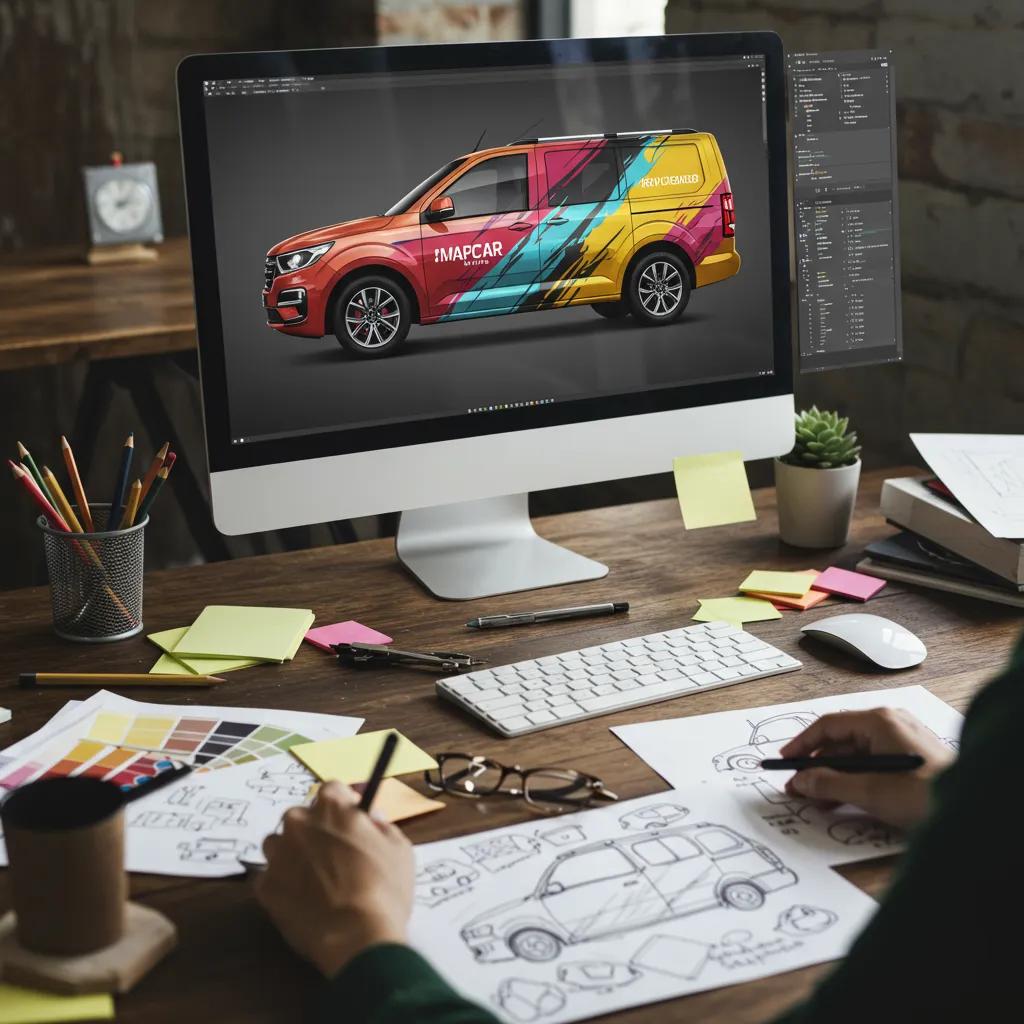
Effective wrap design prioritizes legibility at speed, clear brand hierarchy, and a simple message that viewers can absorb within a few seconds—ensuring that mobile advertising converts impressions into recognition and action. Design principles for moving vehicles focus on contrast, large typography, prominent logos, and minimal clutter, while integrating calls-to-action like short URLs or QR codes placed for easy scanning when parked. Considering 2025 trends—minimalism, selective 3D effects, and interactive QR elements—designers can increase engagement while preserving readability on the road. Below are practical design tips that help wraps perform as mobile billboards for Indianapolis audiences.
- High-contrast colors and large typography for legibility at distance.
- One primary message or call-to-action per vehicle to avoid cognitive overload.
- Strategic logo placement on sides and rear for maximum route exposure.
What Design Principles Maximize Visual Impact for Indy Vehicle Wraps?
Design principles for moving audiences emphasize hierarchy, contrast, and scale: a clear dominant element (logo or headline), high-contrast color combinations, and large readable fonts that remain legible at common driving speeds. Avoid excessive detail that blurs at distance and place essential contact elements—like a short phone number or scannable QR code—on rear and side panels where stopped traffic and pedestrians can engage. Mockups should be reviewed on vehicle templates to ensure proportionality, and designers should test visibility in real-world lighting to confirm effectiveness.
How Are 2025 Vehicle Wrap Trends Like Minimalism, 3D Effects, and QR Codes Used?
2025 trends favor minimalist layouts that reduce visual noise and prioritize instant recognition, while selective 3D effects add perceived depth without compromising readability. QR codes enable measurable, interactive calls-to-action that link viewers to trackable landing pages or offers, improving lead attribution for wrap campaigns. Best practice places QR codes where vehicles are likely to be stationary—rear bumpers or side doors—and pairs them with short, compelling prompts that justify scanning.
What Is the Professional Vehicle Wrap Installation Process for Indianapolis Businesses?
The professional installation process follows a predictable sequence—consultation, design mockups, material selection, installation, and post-install inspection—that ensures quality, durability, and consistent branding across a fleet. Installers begin with vehicle assessment and measurements, proceed through proofing and approvals, recommend material options based on expected lifespan and environmental exposure, then schedule installation and final inspection for quality assurance. Proper surface prep, heat-assisted installation techniques, and laminate application are critical to longevity. Below is a materials-focused comparison to guide choices between premium film brands and emerging eco-friendly options.
This table helps Indianapolis businesses compare material choices and expected outcomes.
How Does the Consultation and Design Phase Work for Custom Wraps?
Consultation begins with a vehicle assessment, route analysis, and discussion of marketing goals; installers collect measurements and photographic references to create accurate mockups. Designers produce proofs that show scale, placement, and color, and clients review revisions until approvals are finalized, with timelines and staging plans communicated for fleet rollouts. This phase sets expectations for installation windows, material choices, and any required vehicle prep, ensuring efficient execution once production begins.
What Materials and Techniques Ensure Long-Lasting Vehicle Wraps?
Long-lasting wraps combine high-quality cast vinyl, protective laminates, correct surface cleaning, and heat-assisted application to conform to complex curves and seams. Premium films from recognized manufacturers offer predictable lifespans and colorfastness, while laminates protect against abrasion and UV degradation. Maintenance—regular washing with mild soap and avoidance of automatic brushes—extends service life, and professional removal preserves original paint, maintaining vehicle value.
How Can Indianapolis Businesses Measure the ROI of Their Vehicle Wrap Advertising?
Measuring wrap ROI uses simple attribution tools and CPM calculations to compare impact with other channels; the core approach is tracking unique responses and calculating incremental leads per impression. Effective methods include assigning unique phone numbers or landing pages to wrapped vehicles, adding QR codes that route to trackable offers, and using customer surveys that ask how new customers found the business. A basic ROI formula is: (Incremental Revenue Attributable to Wrap − Wrap Cost) ÷ Wrap Cost = ROI. Below are practical tracking tactics to implement quickly.
Effectively measuring the success of any local marketing initiative hinges on robust tracking mechanisms.
Tracking Local Marketing Campaigns: Effectiveness and OptimizationThis paper explores the critical importance of tracking local marketing campaigns to measure their effectiveness and optimize performance, particularly in today’s dynamic and data-rich environment. It examines various metrics and Key Performance Indicators (KPIs) relevant to local marketing, such as reach, engagement, conversion rates, customer acquisition cost, and return on investment. The paper analyses the tools and technologies available for tracking local marketing campaigns, including website analytics, social media analytics, customer relationship management (CRM) systems, and location-based services. Furthermore, it delves into the challenges of measuring the impact of local marketing, such as attribution modelling, data privacy concerns, and the integration of online and offline channels. The paper emphasizes the need for a data-driven approach, ongoing analysis, and a commitment to continuous improvement to maximize the effectiveness and return on investment of local
TRACKING LOCAL MARKETING CAMPAIGNS: MEASURING EFFECTIVENESS AND OPTIMIZING PERFORMANCE, 2025
Practical tracking tactics include immediate, actionable setups:
- Unique phone numbers: Use call-tracking numbers on each vehicle to measure inbound leads.
- Dedicated landing pages: Create short URLs or QR-linked pages to measure visits and conversions.
- Customer attribution: Add a brief provenance question to intake forms to capture wrap-driven leads.
These combined methods let businesses estimate impressions-to-lead conversion rates and compare wrap CPM against alternatives. When comparing channels, wraps often demonstrate lower long-term CPM and durable value due to extended lifespan and persistent visibility. For Indianapolis businesses ready to act, consider booking fleet wrap consultations or requesting custom vehicle graphics quotes to align materials, design, and tracking with local campaign goals.